National Sports Policy 2025 must be Inclusive for People with Disabilities
Introduction
On 1st July 2025, the Government of India introduced the new National Sports Policy 2025, popularly referred to as the Khelo Bharat Niti 2025. The new policy aims to elevate India’s position in global sports and redefine the role of sports in everyday Indian life by making it a larger part of education, development, and the economy. This will be achieved through emphasis on athlete welfare, grassroots infrastructure, and technological investment. The larger vision is to support Indian athletes for the international stage, and develop a “sports culture” where participation, physical activity, and access are considered basic rights.
A key declaration of the policy is to consider sports a public good and increase engagement of citizens. The Union Budget 2025–26 allotted ₹3,794 crores to the Ministry of Youth Affairs and Sports, a record sum of which ₹1,000 crores is specifically assigned to the Khelo India Programme.
Challenges we are discussing
The policy addresses inclusion for women, tribal communities, and individuals with disabilities. As we are aware, people with disabilities have historically been denied opportunities to participate in sports because of poor infrastructure development and accessibility, low investment, and social stigma associated with living with a disability. While India has experienced success at the Paralympic Games in recent years, it remains difficult for disabled athletes to access opportunities, training, funding or recognition that non-disabled athletes have and continue to receive, despite their additional efforts.
The Rights of Persons with Disabilities Act (2016) recognises 21 different types of disabilities. Recognising visible and invisible disabilities, along with their different support needs is important while discussing sports participation in schools. The policy aims to make sports a bigger part of everyday life, but the stigma begins from school itself for many – being the last to be picked in a team, not being encouraged by teachers to participate, or lack of accessible infrastructure. Schools need to find ways to incorporate any students with disabilities in Physical Education classes.
It is true that major national programs like Khelo India and Fit India have made an impact in the domain of sports. But even these don’t have built-in systems to include athletes with disabilities in school participation or national talent development. Inclusion isn’t just about competitions; it starts with early exposure, access to sports teachers, and a chance to train. India has between 30 and 35 million persons with disabilities. So inclusion must be integrated within national sports frameworks.
Critique
The new National Sports Policy intends to change the game for Indian sports by 2047, through increasing participation and investment. This intent does include women, tribal and marginalised communities, and people with disabilities, but doesn’t shed much light on how it fulfils this promise.
Disability inclusion is mentioned in Section 6.4 of the policy. a separate section for inclusion makes it feel disconnected from the main vision. India is a signatory of the United Nations Convention for Rights of Persons with Disability (UNCRPD), which talks about recreational activities being a right for all. By placing this principle on the margins, the policy risks sidelining disability and not treating it as a shared concern.
The policy also does not describe real numbers or targets. With the policy itself talking about increased participation in sports, there are no guidelines or recommendations on accessibility, or how coaches, schools and institutions can support athletes with disability. Out of the total budget mentioned for the policy, it is unclear how much of it will be allocated towards disability inclusion or accessibility.
Suggestions and Best Practices
The inclusion of persons with disabilities needs to evolve from symbolic language to structural change.
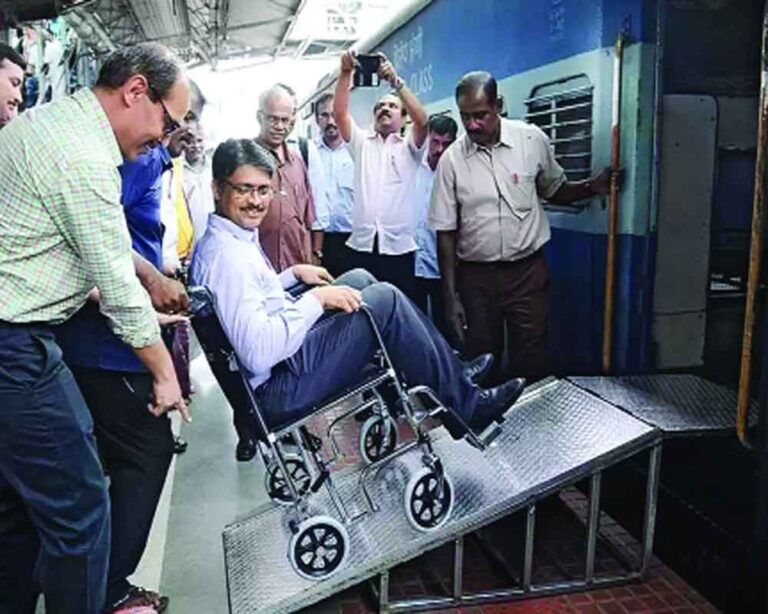
From the outset, universal design principles should be utilized to develop public and private sports facilities instead of building separate spaces. Accessibility audits should be done before funding. Ramps, accessible toilets, tactile signage, and accessible, student-friendly seating must be treated as necessities to remove primary barriers to participation.
Lack of data previously has also made it challenging to plan, fund or measure progress. India till now has had no national tracking system to monitor the participation of athletes with disabilities, at school or professional levels. These numbers then inform policy updates, funding allocations, and training guidelines. The National Sports Policy aims to address this gap by having a monitoring framework in place.
It can be helpful to look at some ways other countries have incorporated disability inclusion in sports. Following the 2020 Tokyo Olympics, Japan invested in making more than 45,000 publicly accessible sports facilities compliant with universal design. These are legally and financially supported by Japan’s Sports Promotion Lottery Law to offer commitments and consistent funding for Olympic and Paralympic development.
There can be requirements in place for Indian to work with athletes with disabilities. Australia’s Sport 2030 policy, for example, has resulted in over 1.87 million adults with disabilities – over 52% of the disabled population in Australia, participating in sports at least three times a week, according to AusPlay.
Conclusion
While films like Sitaare Zameen Par are trying to start conversations around inclusion in sports, stories of athletes with disabilities in India need not always be painted around struggles to receive basic entitlements. The New Sports policy is certainly a major step towards transforming the sports culture in the country. But we need to address specific challenges faced by athletes with disabilities, from the first to the last mile in their sports journey. Identifying challenges faced, not viewing parasports as a separate category, building a culture of inclusion since childhood, and viewing practices in other countries are possible ways of mainstreaming disability inclusion in sports. These efforts will also be in tandem with the Accessible India campaign and make sports a recreational activity for everyone.
Ananya Sharma and Vivek Jat write for NCPEDP.